
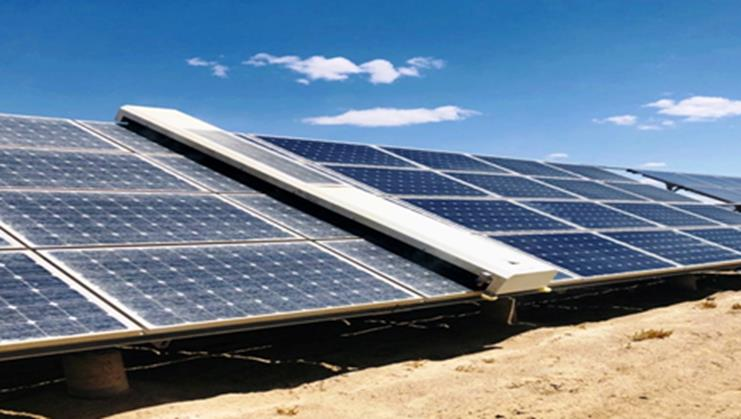
Water-free cleaning solar panel robots represent a transformative solution for maintaining photovoltaic (PV) systems, especially in arid, dusty, or water-scarce regions. By eliminating the need for water, these autonomous devices address critical challenges in solar energy maintenance, combining efficiency, sustainability, and cost-effectiveness.
Technical Design and Innovations
Water-free robots leverage advanced engineering to operate without water. Their design typically includes:
- Control Systems: Many robots use microcontroller platforms like Arduino DUE for onboard control, handling motion direction, speed, and brush activation through sensors such as ultrasonics for spatial positioning. Others employ STM32 microcontrollers for adaptive path planning, enabling automatic edge detection, trajectory correction, and obstacle crossing.
- Cleaning Mechanisms: Dry cleaning is achieved via spiral nylon brushes, rolling brushes, or combined systems with negative pressure adsorption to remove dust and sand without raising particles. For instance, some robots integrate brush and negative pressure systems for efficient dust removal.
- Mobility and Stability: Robots often use track-and-suction cup designs or negative pressure adhesion to stay stable on inclined panels (up to 25° slopes). Adaptive systems with multiple sensors ensure balance and prevent falls, such as 4-point sensing for 360° edge detection and forced pull-back mechanisms.
- Connectivity and Automation: Wireless networking via technologies like LPWAN or Bluetooth allows coordination between robots and remote monitoring through mobile apps, supporting large-scale solar farms. Some designs even include following robots to provide continuous power, extending operational time.
Ưu điểm cốt lõi
These robots offer significant benefits over traditional cleaning methods:
- Hiệu quả cao: Cleaning efficiency can exceed 98%, effectively restoring PV panel output by removing dust that can reduce efficiency by 10–65%. Tests show cleaned panels increase conversion efficiency from 12.16% to 13.72% under solar radiation.
- Water and Resource Savings: As waterless systems, they are ideal for deserts or areas with water scarcity, eliminating the need for costly water infrastructure.
- Giảm chi phí: They lower labor costs and safety risks by automating tasks, with economic studies indicating very low development and maintenance costs. For example, manual cleaning covers <2,000 m² daily, while robots can clean hundreds of panels autonomously.
- Environmental and Safety Benefits: By avoiding manual high-altitude work and water usage, they reduce hazards and ecological impact. Thermal camera tests show that cleaning prevents temperature rises in dusty panels, enhancing longevity.
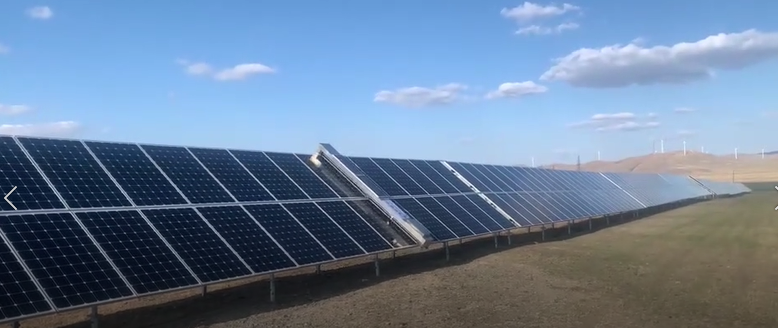
Todos Automatic Solar Panel Cleaning system
Khoảng cách làm sạch: 1600~3000m;
Pin: 24V/16Ah;
Công suất tấm pin: 55W;
Chổi: Vật liệu mềm dẻo không bám bụi PA610;
Góc vượt chướng ngại vật: ≤22°;
Nhiệt độ môi trường: (-30℃~70℃);
Mức độ bảo vệ: IP65;
Tốc độ đi bộ: 12m/phút;
Chế độ làm sạch: Giặt khô
Chế độ điều khiển: Điều khiển từ xa qua Internet + Điều khiển ứng dụng + Điều khiển thủ công.
Application Scenarios and Case Studies
Water-free robots are versatile across various PV installations:
- Large-Scale Solar Farms: Suitable for utility-scale plants in deserts or polluted areas, where dust accumulation is severe. They can operate in arrays with minimal human intervention.
- Distributed and Rooftop PV: Designed for distributed systems in water-scarce regions, with optimized structures for different panel angles and configurations.
- Agricultural and Fishery-Integrated PV: Used in agrivoltaic projects where maintenance efficiency is critical for revenue.
- Real-World Impact: In a UK case, a Cornwall solar farm reported a 23% energy output increase after deploying autonomous units, with the system paying for itself in 14 months.
Challenges and Future Outlook
Despite advancements, challenges remain:
- Environmental Adaptation: Robots must withstand varying wind conditions, dust interference, and steep slopes, with systems like docking stations for high-wind scenarios.
- Technological Evolution: Innovations like AI-driven path planning, improved battery life via solar charging, and integration with water recycling systems for hybrid cleaning are emerging. The trend toward lower hardware costs and enhanced connectivity (e.g., 4G/5G) supports wider adoption.
- Market Growth: With global PV capacity expanding, automated cleaning is becoming a standard for operational efficiency, aligning with sustainability goals like net-zero targets.
In summary, water-free robot vệ sinh tấm pin mặt trời are pivotal for the solar industry, offering a reliable, eco-friendly alternative to manual methods. By leveraging smart control systems, dry cleaning mechanisms, and robust safety features, they enhance energy output while reducing costs and resource use. As technology matures, their role in maintaining PV efficiency is set to expand, driven by ongoing innovations and real-world successes.


