
Main Safety Hazards
- Electrical Safety Risks (Electric Shock)
- Leakage Risks: Solar panels, mounts, and cables may suffer from aging or damage, leading to electric leakage. Not testing with a voltage pen and disconnecting the system power before cleaning can easily result in electrocution.
- Working in Inclement Weather: It is forbidden to work during thunderstorms, heavy rain, or extreme heat. Thunderstorms increase the risk of lightning strikes, while high temperatures may intensify the risk of electric shock.
- Risk of Falls from Heights
- Cleaning on roofs or high places without safety harnesses, helmets, or stable footing poses a serious fall risk.
- To facilitate operations, personnel may illegally step on solar panels, rails, or supports, which is not only dangerous but may also cause micro-cracks or structural damage.
- Personal Injury and Environmental Risks
- Physical Scrapes: The edges of aluminum frames of solar panels are usually sharp. Without gloves and goggles, cleaning can easily lead to cuts.
- Health Hazards: Working under high-temperature conditions (especially on rooftops in summer) while carrying heavy loads (e.g., water tanks) can lead to heat stroke and physical exhaustion. The reflective surface of panels may also strain the eyes.
- Water Resource Pressure and Secondary Pollution: In arid regions, excessive water usage for cleaning can exacerbate water scarcity. Improper use of chemical cleaners may corrode panels and contaminate the environment.
- Equipment Damage Risks
- Micro-Cracks on Panels: Stepping on panels or improper use of high-pressure water jets can create micro-cracks that are difficult to detect, affecting energy production efficiency and potentially causing hotspot effects.
- Surface Scratches: Using rough or non-specialized cleaning tools (e.g., hard brooms or sandpaper) can scratch the photovoltaic glass and impair light transmission.
- Thermal Stress Damage: Washing in extreme temperatures can lead to sudden temperature changes that may cause glass breakage.
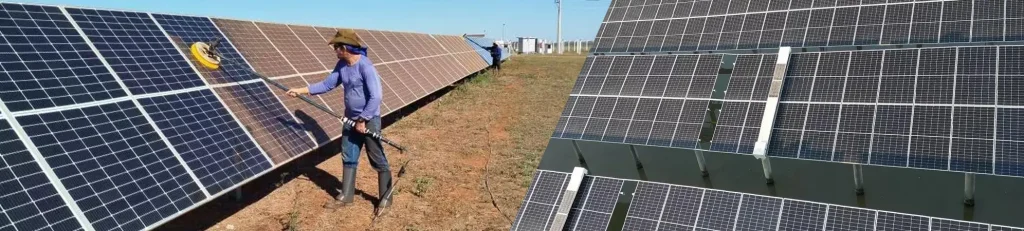
Comparison with Automated Cleaning Methods
Compared to the high-risk nature of manual cleaning, fully automated cleaning systems (e.g., Todos Autonomous Solar Panel Cleaning Robot) or smart handheld devices (like WaterSprayElephant intelligent remote-controlled cleaning brushes) are designed to fundamentally eliminate or reduce these hazards:
- Elimination of Manual High-Altitude Work: Robots can achieve unmanned operation, completely avoiding fall risks.
- Avoid Electrical and Personal Injuries: Personnel do not need to directly interact with live systems or operate in hazardous environments.
- Protection of Panels: Specialized soft bristles (e.g., ultra-flexible nylon) and controllable cleaning force effectively prevent physical damage to the panels.
- Improved Safety and Efficiency: Smart handheld devices that offer remote control and battery separation design reduce risks associated with personnel running around, carrying loads, and direct contact with electrical interfaces.
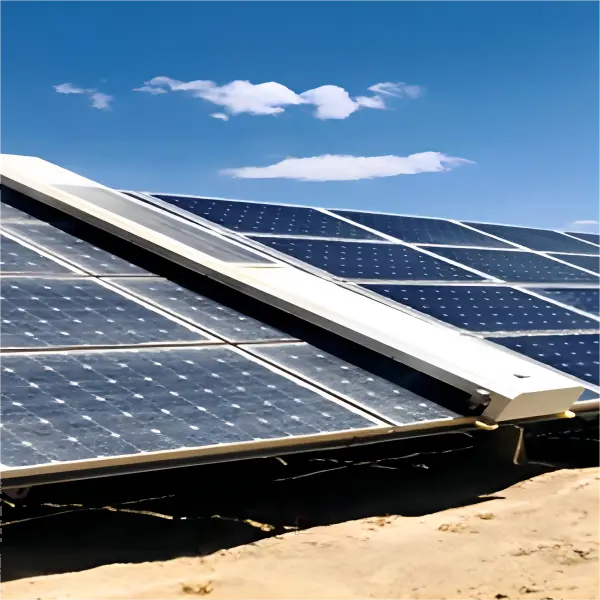
Safety Cleaning Guidelines
If manual cleaning is necessary, strict adherence to the following core safety protocols is essential:
- Power Off: Completely disconnect the inverter’s DC side switch or the main power supply and hang warning signs.
- Inspection and Testing: Check equipment integrity and use a voltage pen to confirm there is no leakage.
- Choose an Appropriate Time: Opt for cooler, windless times such as early morning or late evening, avoiding extreme weather.
- Personal Protective Equipment: Wear non-slip gloves, goggles, helmets, and safety harnesses.
- Use Proper Tools: Employ soft, non-abrasive cleaning tools (like sponges or specialized soft brushes), prohibiting the use of high-pressure water jets or harsh chemical cleaners.
- No Standing on Panels: Always work from a safe position and never step on solar panels in any form.


